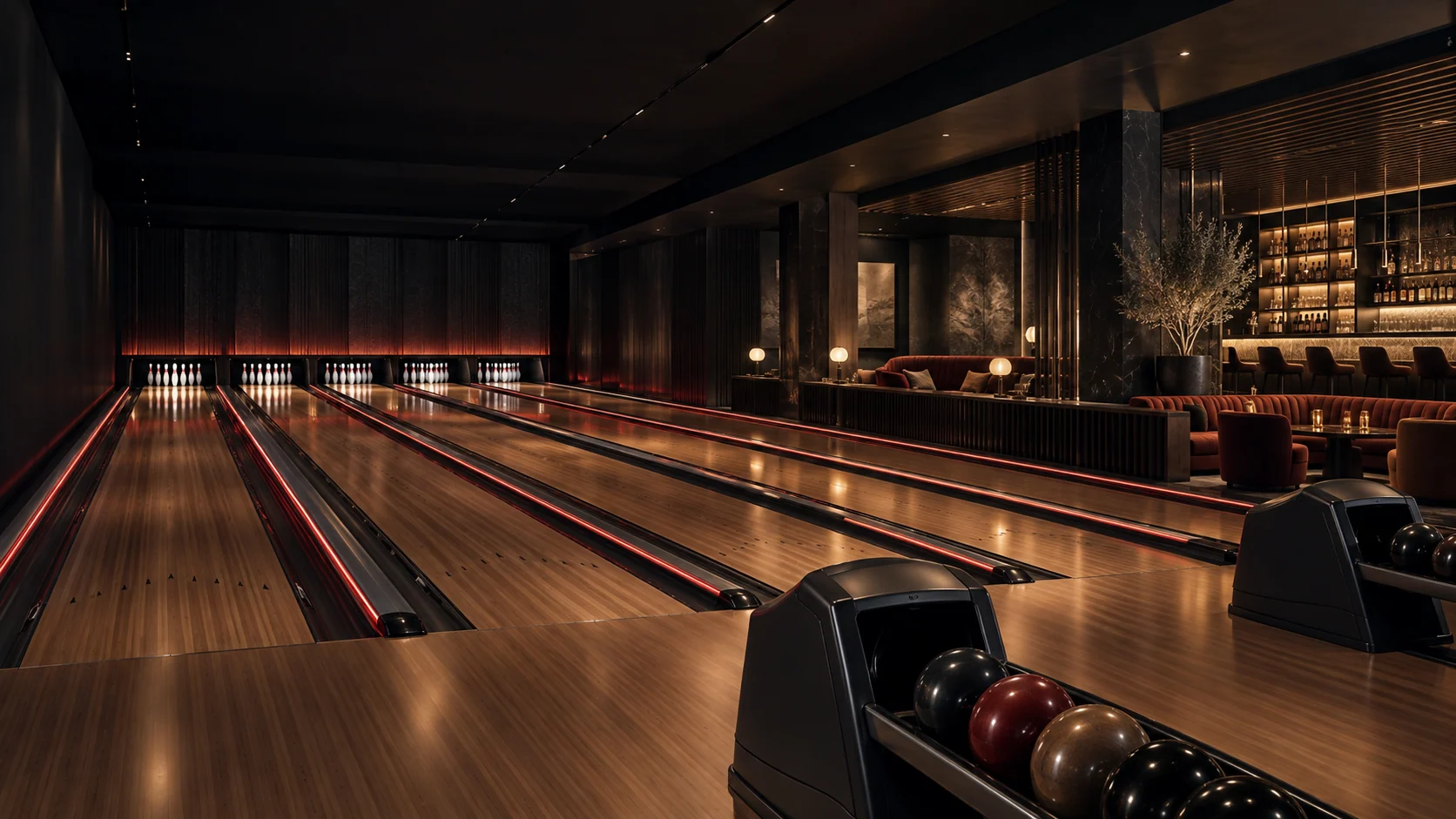
Filling the plan before defining the operation
When equipment is placed before the business concept is clear, the remaining space has to absorb reception, seating, F&B and working routes. This can produce a venue with attractive capacity on paper but difficult daily operation.
Define who will visit, what they will buy and how the team will serve them. Then assess how the lanes fit that operating model.
Treating circulation as leftover space
Guests arrive, change shoes, wait, meet other people and move between activities. Staff need routes for service and maintenance. Those movements deserve attention while the plan is still flexible.
Walk through representative visits and group changeovers. The exercise can reveal conflicts that are not obvious when looking at each department separately.
Assuming every technology will connect
A booking platform, scoring system, POS and cashless solution may each work well individually while still needing specific integration work. A general statement about compatibility does not define the actual connection.
Our bowling software approach starts with the workflow and the responsibilities of each system. Check the precise products, interfaces and implementation scope before making the connection part of the promise to guests.
Leaving maintenance and supplies until opening
The venue needs practical access, appropriate routines and a way to identify and obtain the parts and consumables it uses. Those needs should be reflected in the equipment and support discussion.
Equipment supply planning should cover the opening list and replenishment. Machine selection should include the requirements for staff preparation and ongoing support, not only the initial purchase.
Treating a package as a marketing exercise
A birthday or corporate package can combine lanes, shoes, food and several staff roles. If the timing and responsibilities are unclear, the offer can create repeated pressure during trading.
Rehearse the package before selling it. Check the booking rules, preparation time, seating and service sequence. Professional bowling planning is stronger when those operating questions are considered alongside the equipment layout.
What to take into your project
The most useful planning review follows a guest visit and a staff shift through the proposed venue. It reveals the decisions that an equipment list cannot show.
Review your bowling plan