Establish the opportunity
Start by recording the location, intended audience, project constraints and decisions already made. Identify which assumptions need evidence and which specialists must be involved.
This first step creates a shared understanding of the project. Without it, the design, supplier and operating discussions can move in different directions while appearing to make progress.
Define the concept and commercial logic
Decide what the venue offers, which occasions it serves and how the main revenue streams work together. The attraction mix and F&B concept should follow that logic.
Test the assumptions against the space and operating resources. The concept should explain both why guests will visit and what the business must do to deliver the experience.
Translate the concept into a working brief
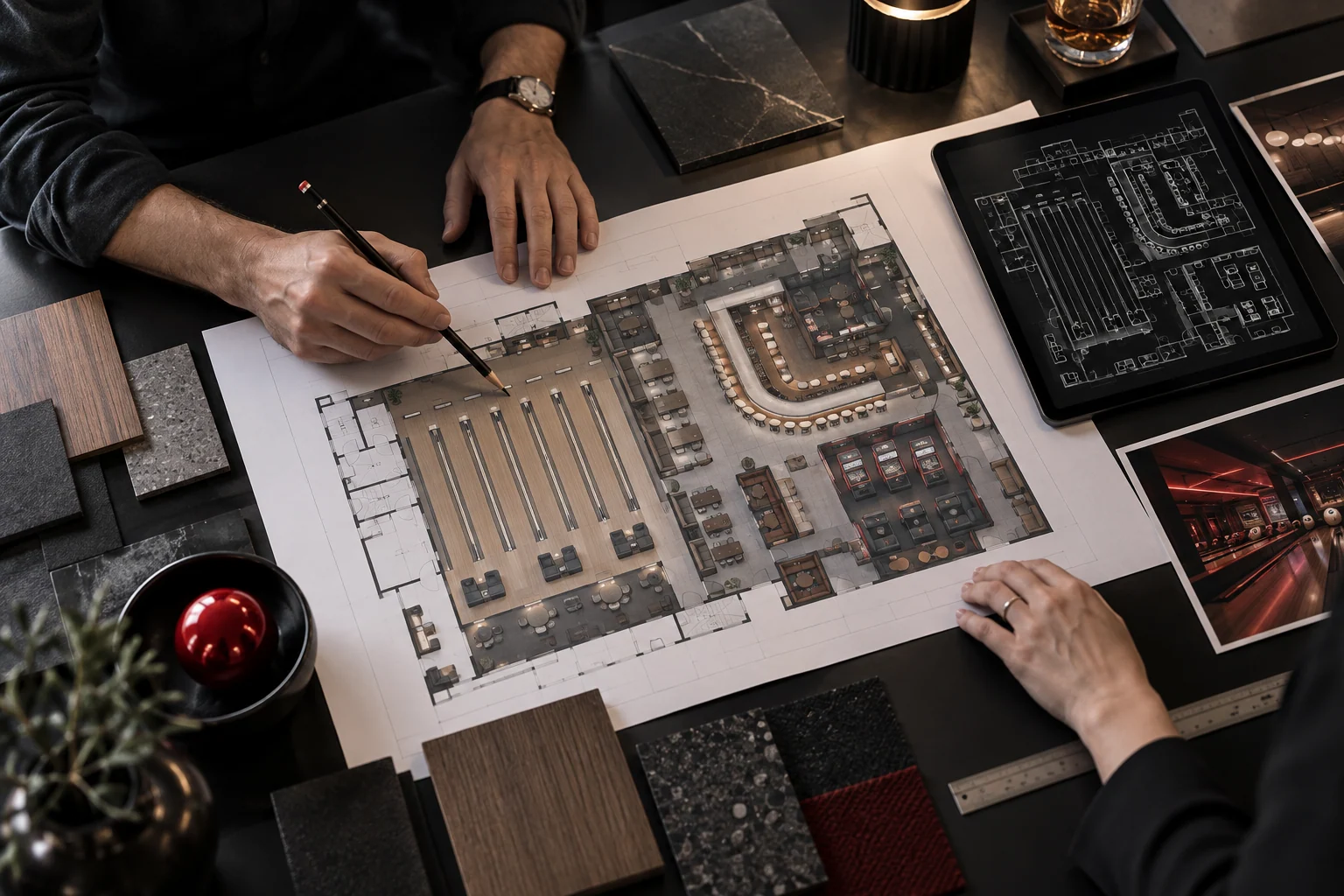
The layout should connect arrival, waiting, play, dining and departure with the staff and service routes. Equipment and software requirements should describe the functions needed to run those processes.
Professional bowling, arcade and cashless systems can then be evaluated as parts of the same operation. Supplier specifications and the appointed design team’s requirements need to be reconciled before implementation.
Prepare the opening as an operating event
Opening preparation includes responsibilities, training, testing and rehearsing complete guest journeys. The team needs to know how departments hand work to each other and how common exceptions are handled.
Confirm the scope of support, the information available at handover and the route for resolving an issue. The project should not depend on an unwritten assumption about who will take care of a task.
Use the opening to begin a learning cycle
The actual venue will produce new evidence. Review guest movement, waiting, service friction, package delivery and the information available from the systems. Prioritize improvements according to the problem they solve and the work required to make them.
OBED’s consulting approach connects these stages from the first idea to post-opening review. Each stage should produce a useful next decision, with the scope and responsibilities clear to everyone involved.
What to take into your project
A coherent sequence helps the project team make connected decisions. Concept, equipment and opening preparation should describe the same operating business.
Start a project conversation